Part 02 — Design your space

15 simple ways to make an ordinary apartment feel extraordinary.

Explore proportion, texture, color, lighting and thoughtful details to make the space feel unmistakably yours. These 15 ideas turn ordinary rooms into thoughtful, comfortable spaces, using proportions, texture, light, and a few things with a story.

SMALL DECISIONS MAKE A LASTING DIFFERENCE.

The 15 principles

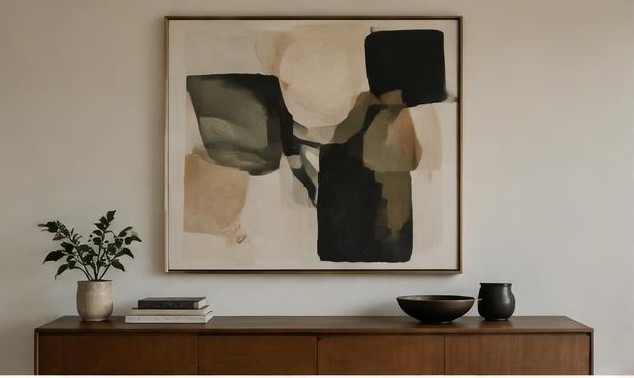
Large framed abstract art at eye level above a low console
01 / 15

Bring art down to eye level

A small shift in height can make a blank wall feel thoughtfully composed.

Why

Art feels connected to the room when you can enjoy it without looking up. A consistent center line also gives a collection a sense of order.

How

Start with the center of the artwork about 57 inches (145 cm) above the floor. For a gallery wall, use the center of the whole arrangement. Above furniture, adjust so the art relates to the piece below rather than following the number rigidly.

57 inches is a starting point, not a commandment.
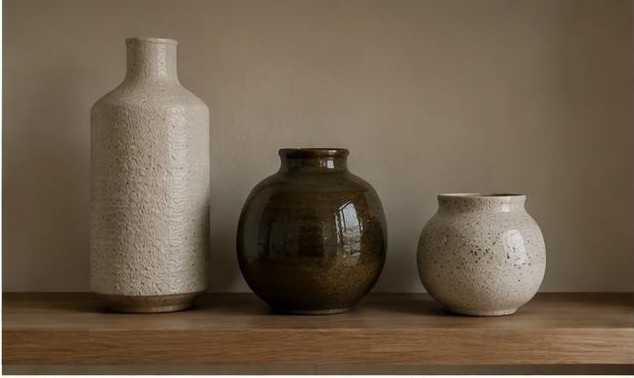
Three ceramic vessels in tall, medium, and low shapes
02 / 15

Style in odd numbers

Think in little compositions, not perfectly matched pairs.

Why

Groups of three or five can feel less formal and give the eye a natural route through a display. Different heights keep the grouping from becoming a flat line.

How

Try a tall vase, a medium vessel, and a low bowl. Vary their shapes and heights, but repeat one material or color. Step back and remove anything that makes the arrangement feel crowded.

Three objects. Different heights. One connecting thread.

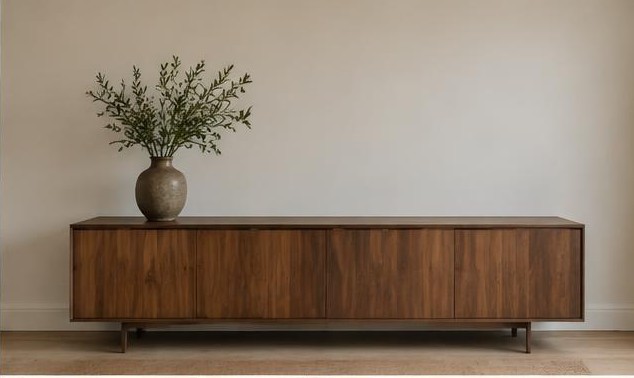
Uncluttered walnut sideboard with a single vase and open wall space
03 / 15

Let the room breathe

The space between things is part of the design, too.

Why

Empty surfaces and open wall areas make your chosen pieces easier to notice. A boxy room often needs less visual noise, not more objects.

How

Clear a shelf or tabletop, then put back only the things you use or love. Leave some of the surface visible. Keep circulation routes open and resist filling every corner just because it is empty.

Give the things you love a little room around them.

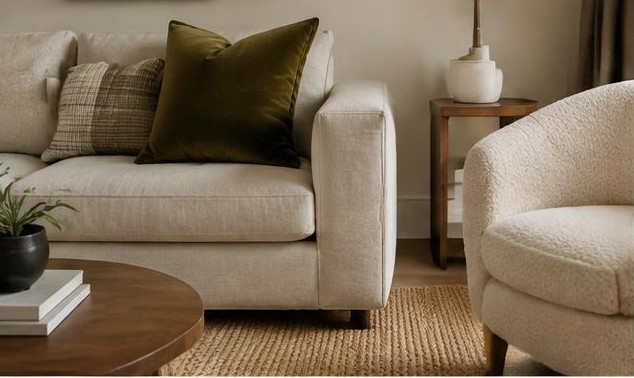
Linen sofa with velvet cushions beside a boucle chair and woven rug
04 / 15

Layer contrasting textures

Warmth is something you can feel as well as see.

Why

A mix of smooth, rough, soft, and structured surfaces adds depth without needing lots of color. It softens the repetitive finishes of a standard apartment.

How

Pair a linen sofa with a velvet cushion, a woven rug with a smooth table, or a nubby chair with glazed ceramics. Keep everyday touchpoints soft and choose durable, washable fabrics where practical.

Let texture do some of the work color usually does.

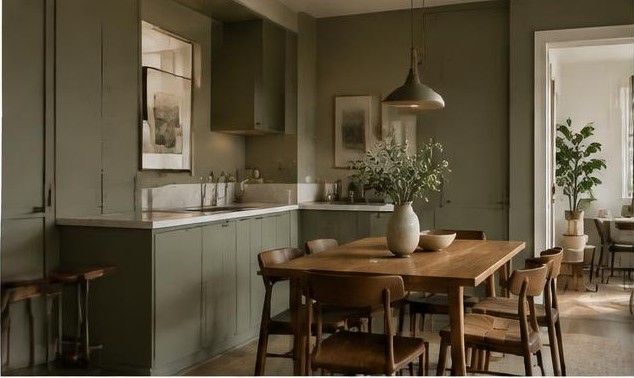
Open apartment with coordinated sage and olive green finishes
05 / 15

Find colors that belong together

A considered color relationship makes different pieces feel like a whole.

Why

Analogous colors are neighboring chromatic hues on the color wheel, such as blue and blue-green. Their shared undertones can make a room feel cohesive; this is a design convention, not a guaranteed psychological effect.

How

Choose a neighboring hue family, then vary its lightness and saturation. Use quieter neutrals for large areas and test fabrics in the actual room, by day and at night. The four moods below are useful starting points—not all are strictly analogous.

Repeat undertones, not the exact same shade everywhere.

A little color inspiration

Palettes for different moods

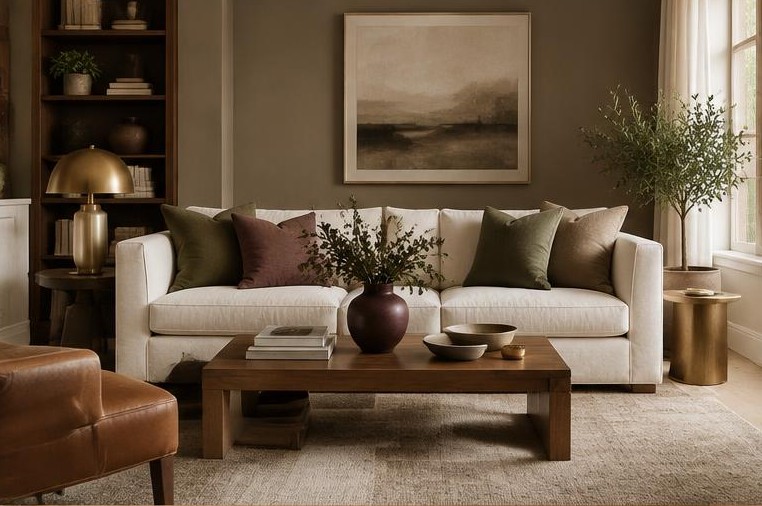
Warm Collected Neutrals: Linen, walnut, quiet olive, and a touch of plum. Collected rather than coordinated.

Warm Collected Neutrals

Linen, walnut, quiet olive, and a touch of plum. Collected rather than coordinated.

Start with ivory upholstery and a taupe rug. Add walnut furniture, olive cushions, and one plum vessel; use the golden tan in woven details.

A warm neutral foundation, complemented by muted olive and plum accents for depth and contrast.

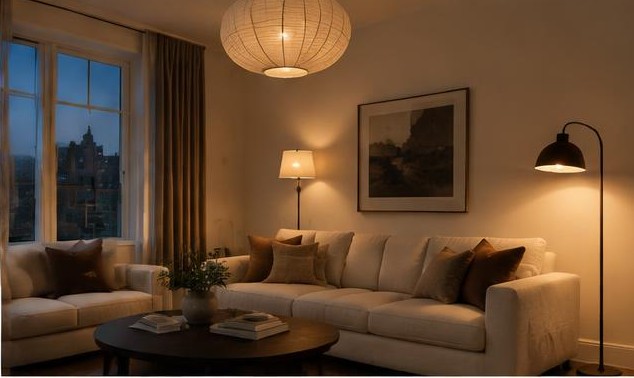
Evening living room with pendant, reading lamp, and softly illuminated artwork
06 / 15

Build three layers of light

One ceiling light rarely tells the whole story.

Why

Ambient light illuminates the room, task light supports activities, and accent light draws attention to an object or corner. Together they offer more flexibility than a single bright source.

How

Keep general lighting, add a reading or desk lamp where you need it, and place a small lamp near art or a shelf. Try plug-in options for rentals. Use compatible dimmers and avoid cords across walkways.

Ambient for the room. Task for doing. Accent for atmosphere.

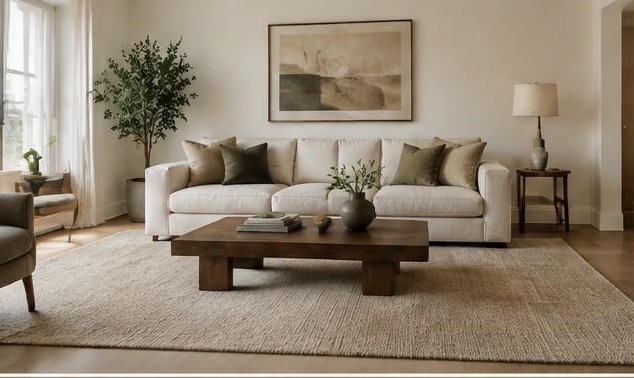
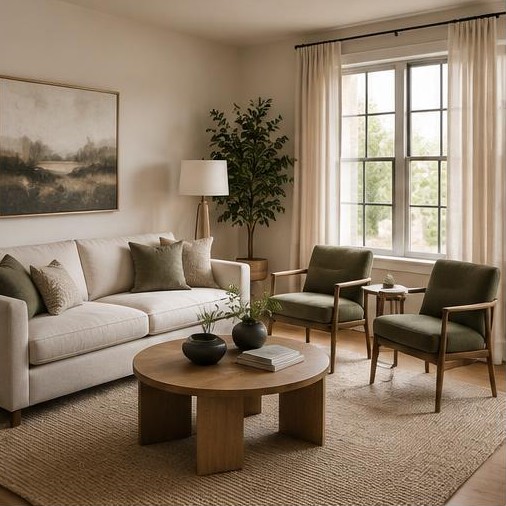
Properly proportioned sofa and coffee table connected by a generous rug
07 / 15

Get the proportions right

Measure the room you have—not the room in the showroom.

Why

Furniture that relates to both the room and its neighbors makes a layout feel intentional. Too many small pieces can look scattered; one oversized piece can block everyday movement.

How

Measure the room, doorways, and access route. Tape the furniture dimensions onto the floor before buying. Walk around the outlines, open doors, and pull out chairs. Choose a rug that connects the seating instead of floating between it.

Tape first. Walk the layout. Buy second.

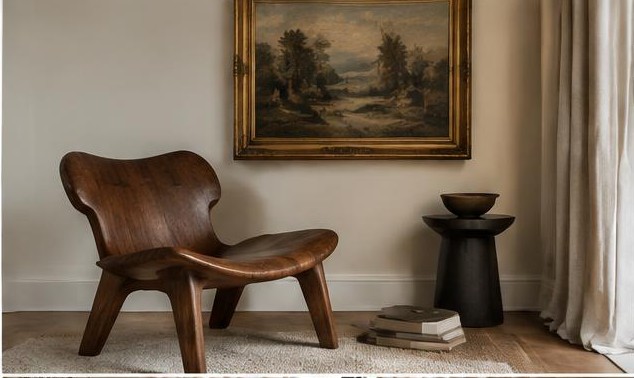
Sculptural vintage wooden chair beneath an old landscape painting
08 / 15

Add something with a past

A room becomes interesting when it does not all arrive from the same catalog.

Why

Vintage, handmade, or unexpected pieces break up the uniformity of new furniture. Meaning and patina can make a simple room feel collected over time.

How

Mix one secondhand chair, an old framed print, or a handmade bowl into your existing furniture. Check condition, dimensions, and stability before buying. Choose something you genuinely enjoy, not something that merely looks fashionable.

One interesting piece can change the whole conversation.

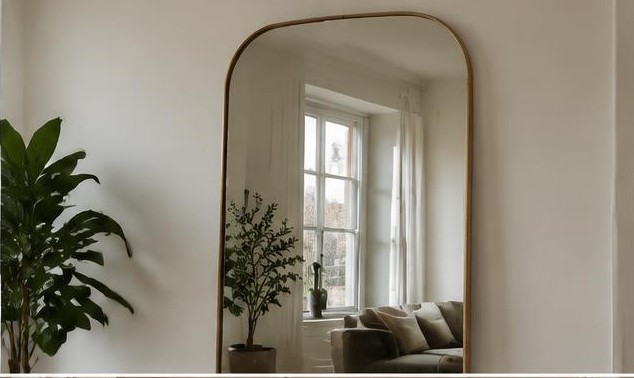
Arched mirror reflecting a bright window and an attractive living area
09 / 15

Give mirrors a good view

What a mirror reflects matters as much as the mirror itself.

Why

A mirror can reflect daylight and create a sense of depth. Reflecting a window or a pleasing corner is more useful than doubling a cluttered surface.

How

Test the reflection from the places you actually sit or stand. Position a mirror opposite or near a window if the view and glare are comfortable. Secure heavy mirrors with suitable fixings and landlord permission where required.

Frame a reflection worth seeing twice.

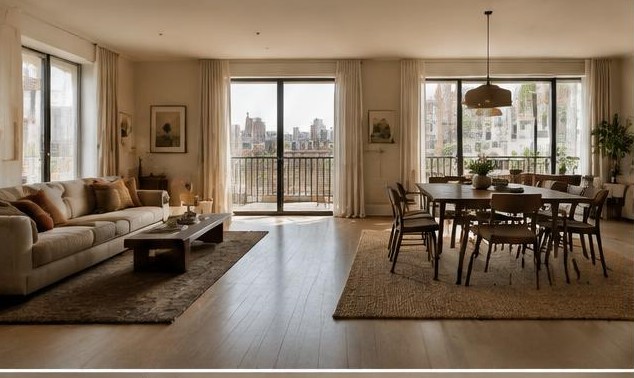
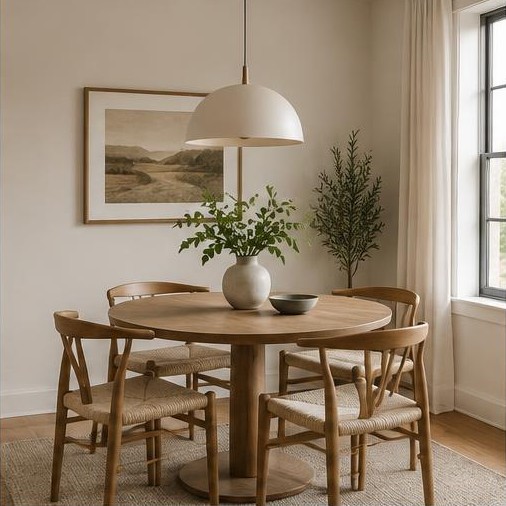
Open-plan apartment with separate living and dining rugs and clear circulation
10 / 15

Create rooms within the room

An open plan can have structure without adding walls.

Why

Clear zones give different activities their own place and stop an open room from feeling like furniture lined up around a perimeter.

How

Anchor conversation with a rug and inward-facing seating. Give dining its own light or table position. Use a low shelf or the back of a sofa as a gentle boundary, while preserving daylight and a clear path through the space.

Define activities, then arrange the furniture around them.

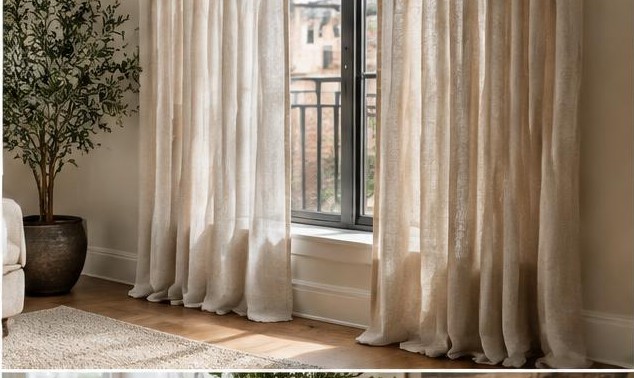
High-mounted linen curtains touching the floor beside a bright window
11 / 15

Hang curtains high and long

Let a simple window feel like part of the architecture.

Why

A high curtain line draws attention upward. Full-length fabric softens hard edges and gives a standard window a more generous presence.

How

Mount the rod high above the window when permitted and extend it beyond the frame so open panels do not block the glass. Measure from the hanging point so the fabric just touches the floor rather than stopping short or pooling in a walkway.

High at the top. Just touching at the bottom.

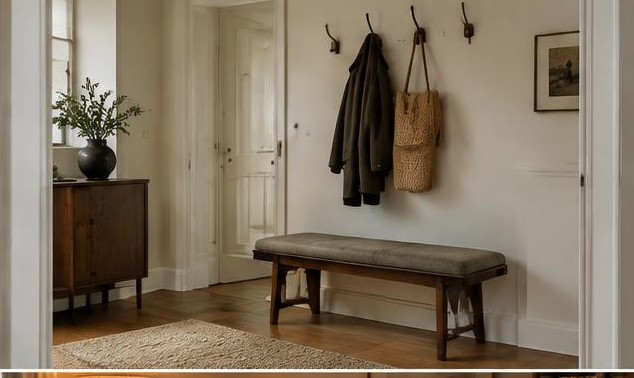
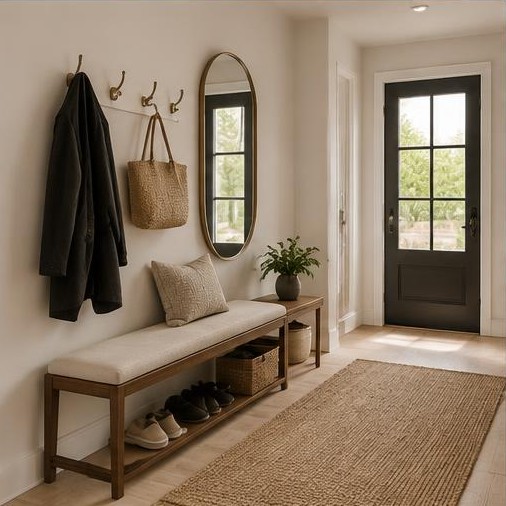
Compact entry with bench, coat hooks, and a tidy small cabinet
12 / 15

Make the entry intentional

Even a small arrival space deserves a little care.

Why

A place for everyday essentials helps clutter stop at the door. The first few steps into the apartment can feel welcoming rather than improvised.

How

Add a slim console or shelf, a tray for keys, hooks, and contained shoe storage. Include a mirror or small piece of art. If space allows, add a bench; if not, prioritize a clear doorway and useful storage.

A landing place, a little storage, a warm welcome.

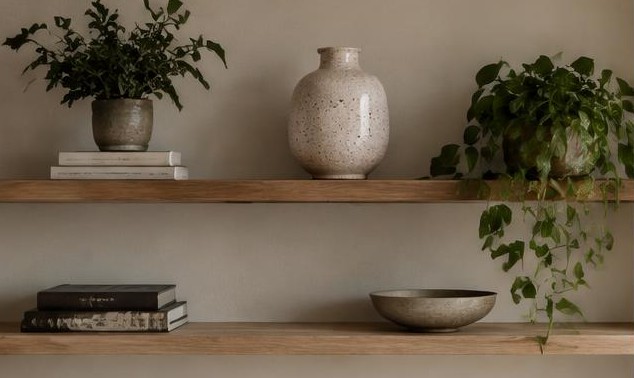
Shelf styled with a small selection of books, ceramic vessels, and greenery
13 / 15

Refresh the small things

A room can evolve without a new sofa or a major shopping trip.

Why

Small accessories change the emphasis of a familiar room. Keeping most of what you already have preserves continuity and avoids unnecessary replacement.

How

Try swapping about 10% of your accessories—not your whole room. Rotate cushions, change a vase, or move a print from another room. Shop your own cupboards first and store the outgoing pieces for another season.

Keep the foundation. Change a small part of the story.

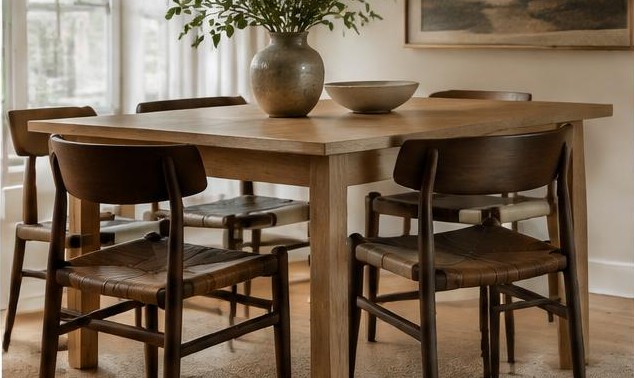
Light oak dining table paired intentionally with darker walnut chairs
14 / 15

Mix wood tones with intention

Wood does not have to match to look like it belongs.

Why

Different tones bring depth and keep a room from looking like a furniture set. Repeated undertones or shapes can connect light and dark pieces.

How

Choose one dominant wood, then add a contrasting tone in a smaller amount. Look for compatible warm or cool undertones and repeat each tone somewhere else. A rug can create a visual break between a wood floor and a wood table.

Coordinate the undertones; let the depths differ.

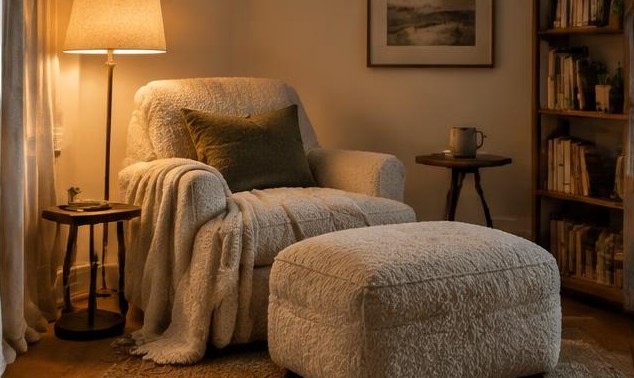
Comfortable armchair with footstool, soft blanket, and a reading lamp
15 / 15

Design for how it feels

The best-looking room is still a room you want to spend time in.

Why

Comfort, ease, and personal enjoyment matter more than copying a photograph. A beautiful arrangement is not successful if it makes daily life harder.

How

Sit in the chairs, check the light where you read, and make useful surfaces easy to reach. Keep objects you enjoy seeing and textures you enjoy touching. Live with the room for a while, then adjust what feels awkward.

Make it beautiful. More importantly, make it good to live in.

Put it all together

One home. Different needs.

A room-by-room guide to making each space work beautifully for everyday life.

Next step

Ready to bring your vision to life?

Turn inspiration into a plan. Use the design checklist to organize your space, prioritize what matters, and make thoughtful decisions before you buy.

Plan your design